
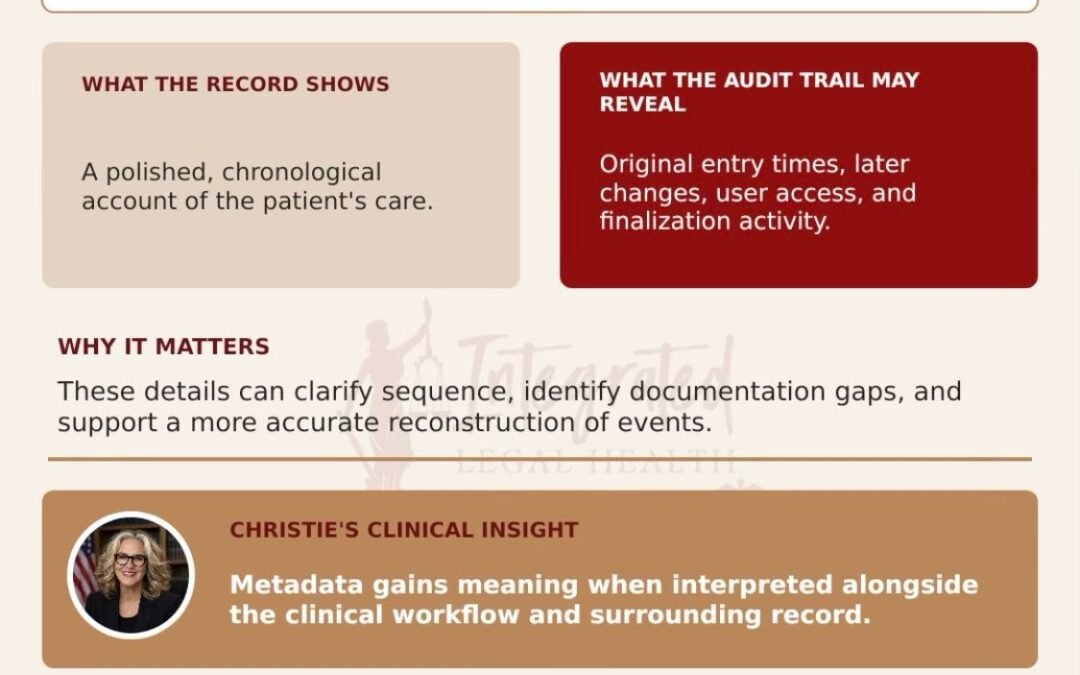
Depending on the EHR system and the data produced, metadata may reveal:
- When information was originally entered
- Whether documentation was later changed
- Which users accessed the record
- When entries were signed or finalized
These details can help clarify the sequence of events, identify documentation gaps, and support a more accurate reconstruction of the patient’s care.
However, metadata should never be interpreted in isolation. A late signature does not necessarily mean the care occurred late. An amendment does not independently establish improper conduct. Each activity must be evaluated alongside the clinical workflow, applicable policies, and surrounding medical record.
Attorney takeaway: Identify and request the relevant EHR audit and metadata reports early in discovery.
What question has the printed chart left unanswered in one of your cases?